

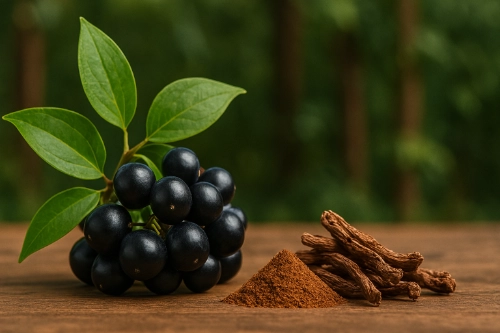

Sarsaparilla’s chemical composition is diverse, and this is what underpins its therapeutic properties:
Saponins – especially sarsapogenin and smilagenin – provide anti-inflammatory, detoxifying, and hormone-balancing effects.
Phytosterols – such as beta-sitosterol – help balance cholesterol levels and support liver health.
Flavonoids – powerful antioxidants that protect cells from damage.
Starch, resins, and essential oils – support digestion and urinary tract function.
Minerals – including iron, zinc, and magnesium.
Together, these compounds give sarsaparilla its liver-protective, anti-inflammatory, diuretic, and tonifying effects.
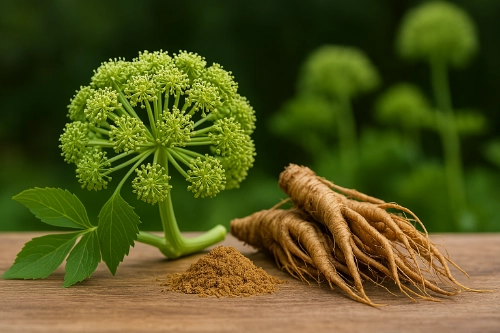

The chemical composition of Norwegian Angelica is rich in biologically active compounds that account for its medicinal effects:
Essential oils – contain alpha- and beta-pinene, phellandrene, limonene, borneol, and other aromatic compounds
Coumarins – such as angelicin and bergapten – contribute to its antispasmodic and anti-inflammatory properties
Organic acids – including caffeic acid and chlorogenic acid
Bitter compounds – like angelicin and angelic acid – support digestion
Resins, tannins, flavonoids, and minerals
Together, these compounds provide Angelica with its tonic, digestion-enhancing, and antispasmodic effects.
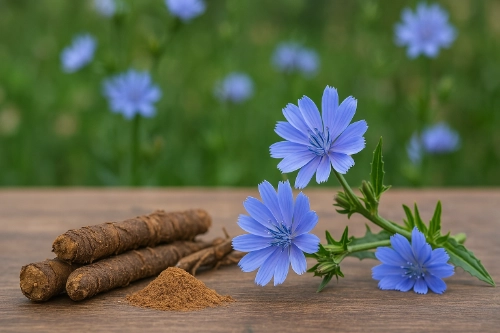

The chemical composition of chicory is diverse and underpins its therapeutic effects:
Inulin – a natural prebiotic that regulates blood sugar levels and improves gut microbiota
Bitter compounds – such as lactucin and lactucopicrin – stimulate digestion and appetite
Flavonoids – antioxidants with anti-inflammatory properties
Organic acids – including chicoric acid and caffeic acid
Tannins, resins, pectins, essential oils
Minerals – such as potassium, calcium, magnesium, and iron
These compounds give chicory its digestive, bile-stimulating, metabolic-enhancing, and mild diuretic effects.


The chemical makeup of Capsicum annuum is rich in biologically active substances:
Alkaloids – primarily capsaicin, which provides warming, circulation-boosting, and metabolism-enhancing effects
Carotenoids – such as beta-carotene, lutein, and zeaxanthin – potent antioxidants
Vitamin C – purifies the blood and strengthens the immune system
Flavonoids – antioxidants with anti-inflammatory action
Organic acids, natural sugars, fiber, essential oils
This composition gives paprika its anti-inflammatory, digestion-enhancing, and circulation-stimulating properties.
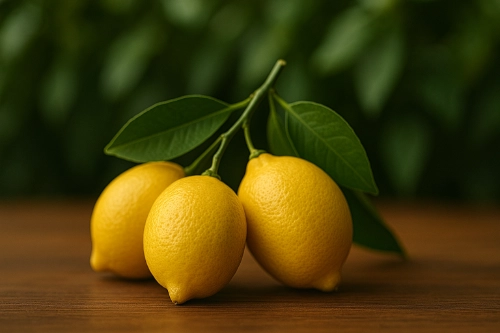

The chemical composition of lemon is rich in biologically active compounds that give it its healing properties:
Vitamin C (ascorbic acid) – a powerful antioxidant and immune booster
Organic acids – primarily citric acid, which aids digestion and detoxification
Flavonoids – such as hesperidin and eriocitrin, with anti-inflammatory and antioxidant effects
Essential oils – especially limonene, with antiseptic and aromatic properties
Pectins, natural sugars, minerals (such as potassium and calcium)
Together, these compounds make lemon an effective aid for supporting health and immunity.
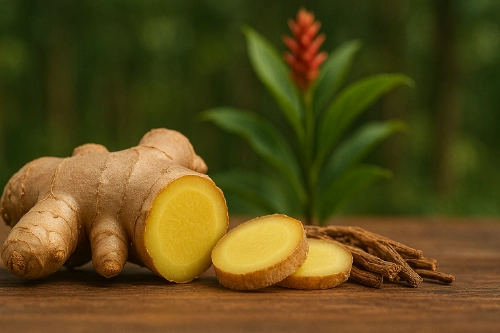

The chemical composition of ginger is rich and diverse.
Active Biological Compounds:
Gingerols – primary compounds responsible for anti-inflammatory and anti-nausea effects
Shogaols – formed from gingerols, even more potent antioxidants
Zingerone – supports digestion and soothes the stomach
Essential oils (1–3%) – contain zingiberene, camphene, citral, borneol, and more, contributing to aroma and therapeutic action
Starch, dietary fiber, amino acids, minerals (such as potassium and magnesium)
Vitamins – B6 and C
Together, these compounds give ginger its well-known healing properties.
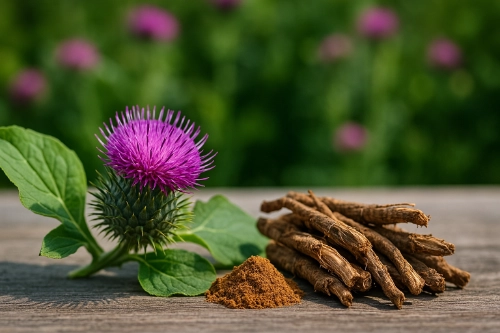

The chemical composition of Arctium lappa is diverse and responsible for its cleansing and metabolism-stimulating effects:
Inulin – a prebiotic that supports gut microbiota and improves metabolism
Sesquiterpene lactones – provide liver-protective and anti-inflammatory effects
Polyacetylenes – known for antibacterial and antifungal properties
Flavonoids – antioxidants that strengthen blood vessels
Tannins, bitter compounds, organic acids – aid digestion, diuresis, and bile secretion
Minerals – including potassium, magnesium, and iron
This composition makes burdock an effective cleansing, diuretic, and metabolism-boosting remedy.
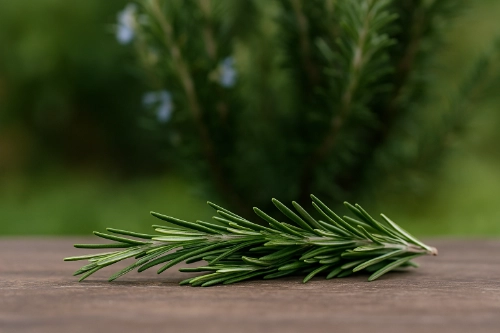

The chemical composition of Rosmarinus officinalis is rich in aromatic and biologically active compounds:
Essential oil (1–2.5%) – contains cineole, camphor, borneol, and alpha-pinene, with antispasmodic, antimicrobial, and stimulating effects
Phenolic acids – especially rosmarinic acid, a powerful antioxidant and anti-inflammatory agent
Flavonoids – with antioxidant properties and capillary-strengthening effects
Bitter compounds, tannins, organic acids, and resins
These compounds give rosemary its hepatoprotective, bile-stimulating, carminative, and antispasmodic properties.
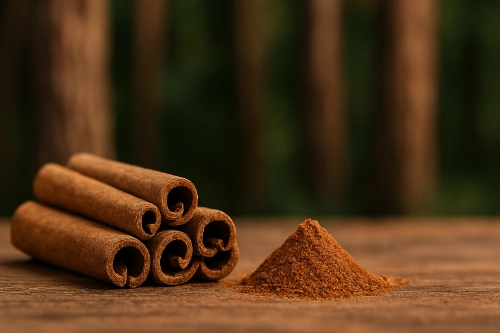

The chemical composition of cinnamon is rich in aromatic and biologically active compounds:
Essential oil (1–4%) – contains primarily cinnamaldehyde (60–80%), which gives cinnamon its characteristic aroma and antimicrobial effect
Eugenol – especially found in C. verum, with anti-inflammatory and antiseptic properties
Tannins – provide astringent and antioxidant effects
Mucilage, resins, natural sugars
Coumarin – present in high amounts in C. cassia, and in lower amounts in C. verum
These compounds give cinnamon its anti-inflammatory, antispasmodic, antimicrobial, and digestion-enhancing properties.
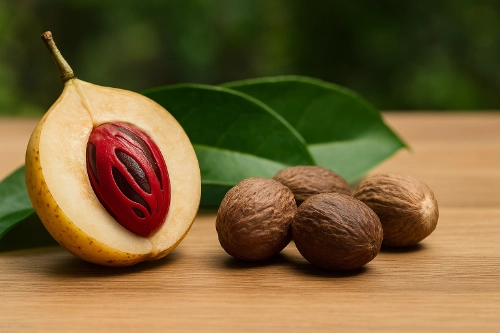

The chemical composition of fragrant nutmeg (Myristica fragrans) is rich in essential oils and biologically active compounds:
Essential oil (5–15%) – contains myristicin, elemicin, safrole, and eugenol, which have anti-inflammatory, antibacterial, and sedative effects
Fats (nutmeg butter) – mainly triglycerides, used topically
Saponins, lignans, acids (e.g., oleic acid)
Starch, minerals, tannins
Antioxidants – including flavonoids and phenolic compounds
This composition gives nutmeg its pain-relieving, antimicrobial, digestion-enhancing, and sleep-supporting properties.
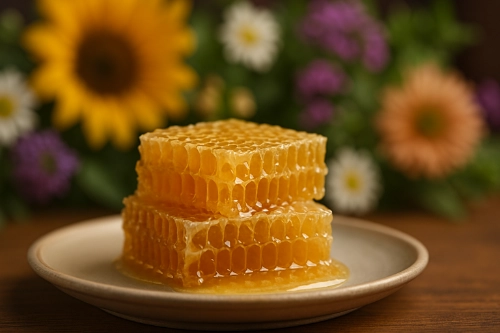

Honey is a natural bee product with a complex and biologically active composition:
Sugars (~80%) – primarily fructose (~38%) and glucose (~31%), along with sucrose, maltose, and others
Water (~17–20%)
Organic acids – such as gluconic acid and acetic acid, contributing to its mildly acidic pH
Enzymes – invertase, amylase, glucose oxidase (produced by bees' salivary glands)
Antioxidants – including flavonoids and phenolic acids
Amino acids – especially proline
Minerals – potassium, calcium, magnesium, iron
Vitamins – B group vitamins and vitamin C (in small amounts)
Honey possesses antimicrobial, antioxidant, hydrating, and healing properties.
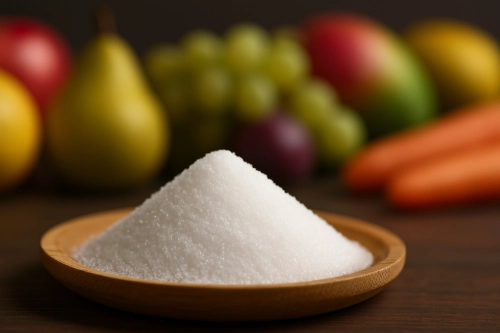

Fructose is a simple carbohydrate — a monosaccharide. It is a hexose sugar (containing six carbon atoms) and structurally classified as a ketose because it contains a ketone group.
Molecular formula: C₆H₁₂O₆
Structure: Monosaccharide, cyclic or linear, with a ketone group
Taste: Sweet — sweeter than glucose and sucrose
Natural sources: Found in fruits, honey, and vegetables
Metabolism: Primarily metabolized in the liver, where it is converted into glycogen or fatty acids
Solubility: Easily dissolves in water and serves as a quick source of energy for the body
Fructose plays a key role in supporting energy levels, liver metabolism, and the detoxification process.

